The Shelf Life
of Decisions
In stores, in IT, and in AI — what a supermarket habit reveals about how systems present choices, and why the first option offered is not always the right one for you.
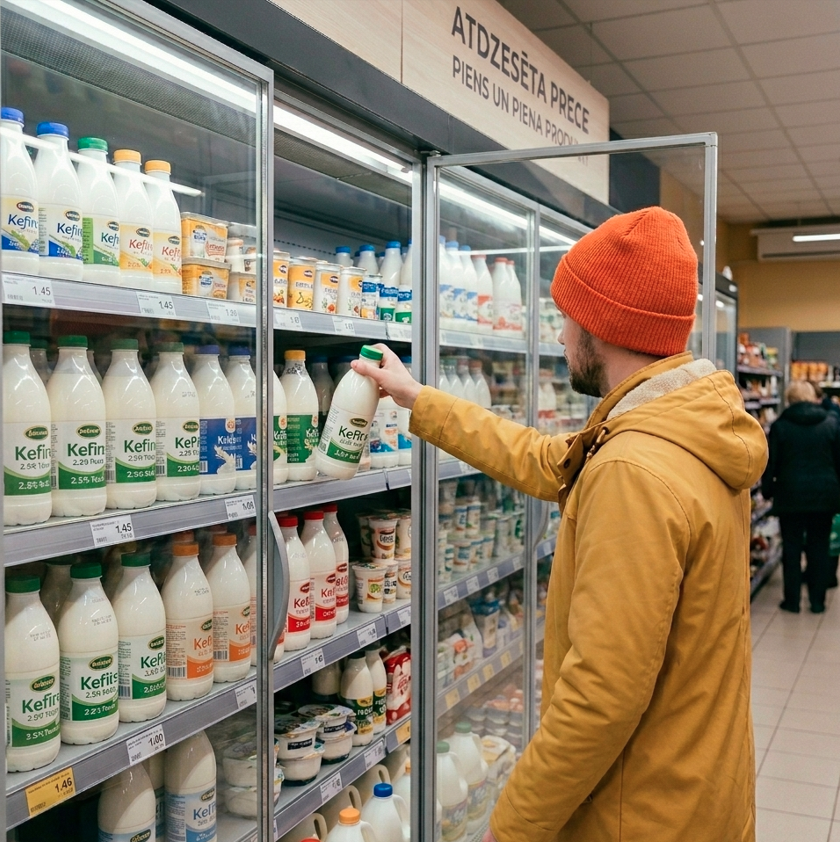
Sometimes a very ordinary habit reveals something deeper.
In a supermarket, the product placed at the front is often the one with the shortest remaining shelf life. It is not there because it is best for me. It is there because it is best for the system that wants to keep moving.
And yet, as a customer, I have my own reality.
Maybe I will eat it today.
Maybe I will not touch it for three days.
Maybe what is "correct" for the shelf is wrong for my week.
So I look deeper. I reach past the front row and take the one that actually fits my context. It takes two seconds. Most people never bother. But the ones who do are doing something more interesting than they realize.
The more I think about it, the more I see this same structure everywhere.
Systems present us with default choices. The first task in the queue. The first report on the dashboard. The first explanation the support agent was trained to give. The first option the algorithm decided you probably want.
And we are quietly encouraged to believe that what appears first deserves our trust.
Visibility is not wisdom. Order is not relevance. Availability is not fitness.
The first thing offered by a system is often the thing the system is most ready to give away — not the thing that is most right for the human being standing in front of it.
In IT, this shows up in queues. First in, first out sounds fair and neutral. But the oldest item is not always the most valuable, the most urgent, or the most relevant one. Sometimes it is just the one that entered the system before anyone thought carefully about prioritization.
Old tickets accumulate gravity. They become real simply by virtue of age. Nobody wants to close them — it feels like abandonment. So they stay at the front of the shelf, technically active, functionally expired.
The same thing happens in backlogs. Ideas stay alive because they entered early, not because they still matter. A task with a low priority number carries a quiet authority it no longer deserves. The system treats its own history as a signal of value — and too often, we let it.
With AI, the issue becomes more subtle — and more consequential.
AI often gives you the first plausible answer. The most statistically likely one. The one sitting at the front of the shelf. It is generated quickly, with confidence, in fluent prose. It looks finished. It reads like it knows.
But plausibility is not the same as suitability. The answer that is most probable across all contexts is rarely the answer that is most right for your specific one.
An experienced user does something very similar to what they do in the supermarket. They do not automatically take the first thing presented. They read it, question it, press on it a little. They ask: is this answer correct in general, or correct for me?
That pause — that small moment of friction before acceptance — is not distrust. It is maturity.
This is why maturity matters, and why it is worth naming precisely.
A mature person does not reject systems. Systems are useful. They encode accumulated logic, move things efficiently, reduce the cost of routine decisions. A store that rotates stock is doing something sensible. A queue that respects arrival time is doing something fair.
But a mature person does not surrender judgment to them, either.
He knows when to accept the default — when the first answer is good enough, when the front of the shelf will do. And he knows when to look one layer deeper: when the context he is living in is different enough from the context the system was designed for that the default is actually wrong.
Good systems optimize flow. Strong decision-makers optimize fit.
Those two things are not the same. They are not even always aligned. And the tension between them — the store’s logic and the customer’s logic, the system’s priority and the user’s reality — is one of the most persistent sources of friction in how we work, how we build, and how we think.
In stores, in IT, and in AI, the option placed first is not always the option with the highest value.
The real skill is not taking what is placed in front of you. The real skill is recognizing what truly fits your context — before its value expires.