The Driver Is Still There
and the Face That Explained More Than the Phone
Presence is not a body in a car or a face in Teams. It is the moment when someone still feels responsible.
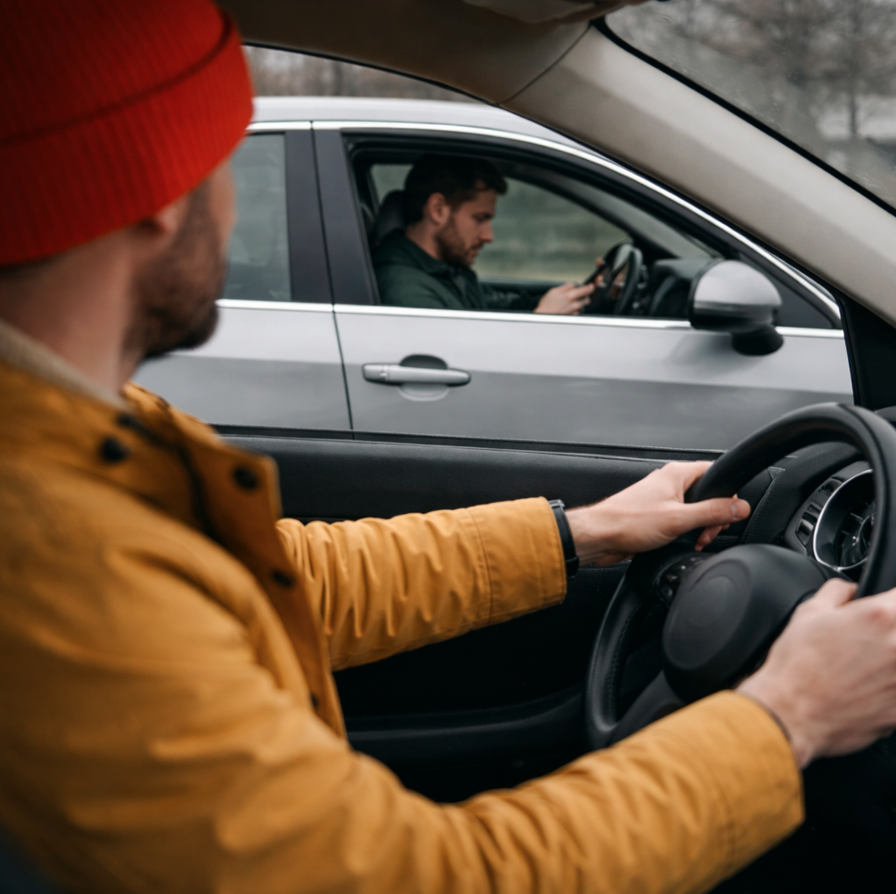
I was standing outside the office when it happened.
Someone honked. I turned toward the sound and saw one car cut hard across another. The gap between them was maybe 20 centimetres. The kind of gap that stops your breathing for a second.
I looked at the driver who had made the move.
Phone in hand. Still looking at it.
But the phone wasn't what stayed with me.
It was the face.
Not fear. Not that brief moment when someone realises what they just did. Not even surprise.
Something closer to: what do you want from me?
As if the other driver had appeared out of nowhere and interrupted her. As if she was the one being inconvenienced. And then she simply drove on, as if nothing had happened at all.
That face explained more than the phone did.
There are two kinds of unpredictable drivers.
The first is the older driver. Slower reaction. Narrower attention. We understand this — age does something to response time, and we account for it. Give more space. Expect less. It's risk, but at least it's explainable.
The second type is different.
Young, or middle-aged. Someone who looks like they should be sharp. And then suddenly they're drifting — slow, slightly off their lane, not aggressive, not erratic. Just absent. You overtake them and you already know what you'll see.
The good news, if you can call it that: these drivers rarely push the pace. They usually go slower than traffic. Nothing extreme.
The bad news: a slow car is not always a safe car.
Sometimes it's just a car with no one inside it.
The face is what I couldn't stop thinking about afterward.
If something had shifted in her — fear, a sharp breath, any sign that the external world had landed — that would be one story. Someone who drifted and came back. That happens.
But nothing shifted.
The road had told her something clear. And she didn't hear it.
That's a different thing. Not a lapse. Not distraction as we usually mean it. So far gone that the near-miss didn't even register. Body in the car. Responsibility already gone. And the sense of entitlement fully intact.
I know this from the other side too.
Not from driving. From a meeting, some months ago. At some point the CEO said my name. Just that — Konsta. And I came back. I had been somewhere else. Not in a phone. Not in email. Just thinking — processing something from earlier, following a thread. Gone enough that it showed.
The thing is: I was thinking. Not absent.
But from the outside, there was no way to tell the difference.
This is where it gets uncomfortable.
The phone driver and the drifting thinker look identical from the next lane. Head down, slow to respond, slightly off-pattern. But one has handed their attention to something that gives nothing back to the situation. The other is still working — just not visibly, not on camera.
I've told my team directly: if you don't need to be in this meeting, leave. Don't stay visible while being somewhere else. The false presence costs more than the honest absence. It creates expectations. People wait for reactions that won't come. They repeat themselves. They keep a seat warm for someone who already left.
But I also know the person who looks absent is sometimes the person doing the most work.
Presence is not what it looks like.
And absence is not always absence.
The car is moving. The camera is on. The name is on the attendee list.
None of that tells you where the attention is.
What made that driver dangerous wasn't the phone. It was that she had already left the situation — and hadn't noticed, or didn't care. The car stayed. The responsibility didn't.
That's the version that troubles me.
Not the distraction. Not even the near-miss.
The face after.
Presence is not a body in a car or a face in Teams.
It is the moment when someone still feels responsible.