The Phone Number
and the Path the System Never Advertised
The queue was still there. The wait was still there. I had simply found a path that existed inside the system, undocumented, unoffered, but real.
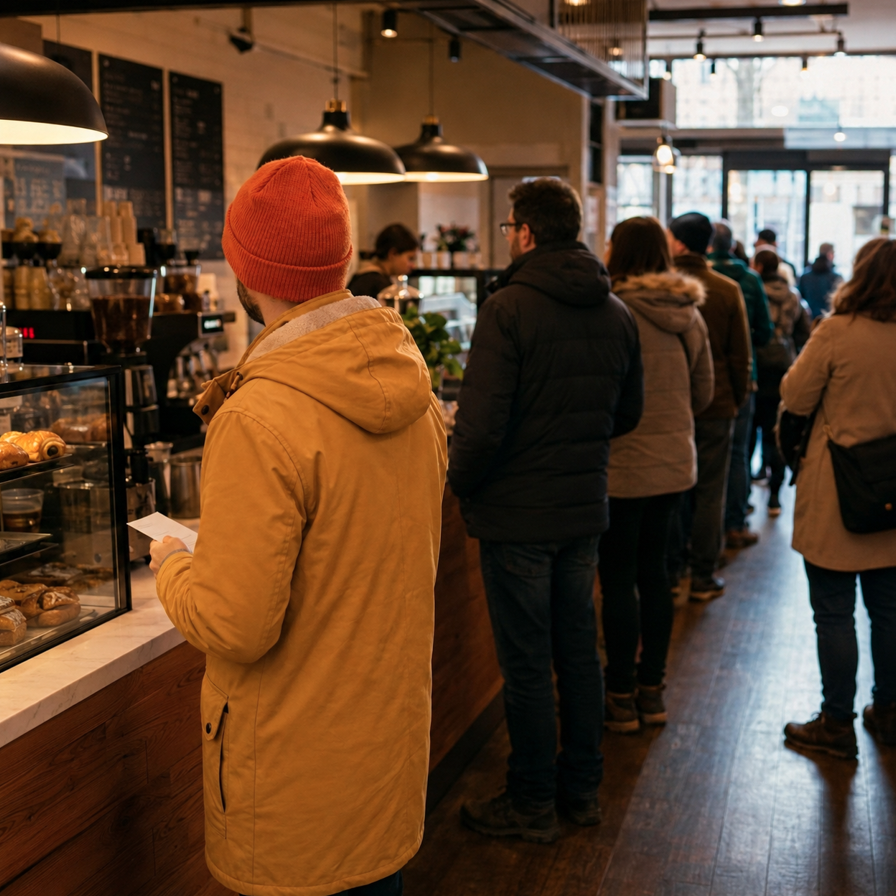
I was running late. Not dramatically late. Just the kind of late where you are calculating while you walk. If the queue is short, I make it. If it is not, I skip lunch or eat at my desk.
The café near the office does one thing particularly well: dumplings. The problem is they cook them to order. Fifteen minutes from request to plate. On a normal day that is fine. At noon, with a queue stretching to the door and a meeting at one, fifteen minutes is not fine.
I had been there enough times to know the pattern. I knew the queue. I knew the wait. I knew how it would go.
So one day I asked. Not to anyone in particular. Just to the person at the register, before the rush: is there a way to order ahead?
She gave me a phone number.
That was it. No app. No system. No loyalty programme. A phone number, written on a small piece of paper.
Now, before I leave the office, I call. I say: hello, this is Konstantin, I will have dumplings. They say: yes, come. By the time I walk over, pay, and find a table, the plate arrives. I save ten minutes. On a tight day, ten minutes is the difference between eating and not eating.
What I noticed afterward: nothing about the café changed. The queue was still there. The fifteen-minute wait was still there. The system still worked exactly as it was designed. I had simply found a path that existed inside it, undocumented, unoffered, but real.
I did not hack anything. I asked a question.
This pattern appears more often than it should.
Most systems have a visible interface: the queue, the form, the process, the standard procedure. That is what you are supposed to use. But inside almost every system there is also a layer that is not advertised. You find it by asking, by being a regular, by knowing someone, or sometimes just by being willing to say: is there another way?
These hidden paths are not all the same.
Some of them are simply undocumented standards. The phone number was probably given to other regulars too. It was not a secret. It was just never written down. The system supported it, no one promoted it.
Some of them are exceptions. The system bends for certain people and not others. Not because of a rule. Because of a relationship, a status, a familiar face. The flexibility is real. It is just not available to everyone. The queue is for most people. The phone number is for some.
And some of them are something else entirely. Not undocumented, not informal. Just wrong. A gap someone found and exploited. A rule that exists on paper and is ignored in practice. A path that technically works but sits on the edge of what the system was supposed to allow, or on the edge of what is legal. These paths exist too. They are used. Often by people who know exactly what they are doing.
The system looks the same from the outside. The hidden layer is different in each case.
What I keep thinking about: most people stand in the queue. Not because the phone number does not exist. But because asking feels like stepping outside the rules, taking something not offered, being the difficult customer.
The queue is the visible contract. The phone number is the real one.
Most systems have both. Few people ask which one they are actually standing in.